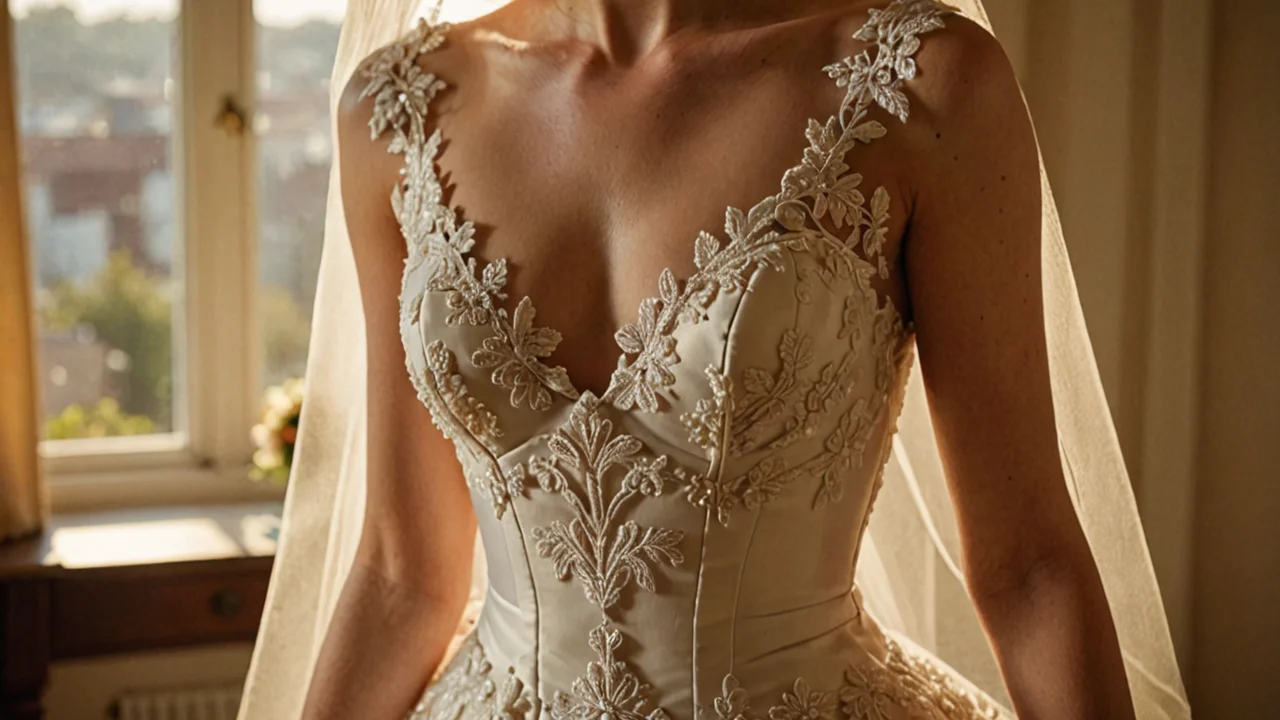
The engagement ring is a betrothal ring worn on the fourth finger of the left hand in most Western cultures, and the wedding ring is the band exchanged in the ceremony and worn afterward — two distinct objects with two distinct budgets, two distinct shopping timelines, and two distinct sets of failure modes. Grand aesthetics, in the bridal sense, is the discipline of making those two objects, the ceremony, and the photographs behave as one coherent visual system rather than three purchases that happen to share a date.
What "grand aesthetics" actually governs, and what it doesn't
Grand aesthetics covers everything a guest perceives without being told: the ring on the hand, the setting, the palette, the light, the scale of the room relative to the number of people in it. It does not cover the legal mechanics of marriage, the guest-list politics, or the catering contract. Those are logistics. Aesthetics is the layer that decides whether the same budget reads as lavish or as slightly off, and the ring is the smallest and most-photographed object in that layer.
The reason to treat the ring as part of the aesthetic system rather than a standalone purchase is that it is the only element that appears in every frame — the proposal photographs if there are any, the getting-ready shots, the ceremony close-ups, the hand-on-hand portraits, and every image taken after the wedding for the rest of the marriage. A ring chosen in isolation from the wedding band often creates a stacking problem that no photographer can hide: a wide ornate engagement ring that will not sit flush against a straight band, or a low-set stone whose basket physically collides with the wedding ring. You notice this in the first fitting of the two together, usually too late to change either.
The limit of the aesthetic frame is that it cannot rescue a ring the wearer does not want to look at every day. Grand aesthetics is about coherence, not about maximizing visual impact at the expense of daily wear. A reader who works with their hands, wears gloves, or dislikes protruding stones is making a wearability decision that outranks any palette consideration, and the honest answer there is to choose the flatter setting and let the aesthetic system adapt around it.
Engagement ring first: how the budget rule got replaced, and what to use instead
The old guidance of three months' salary is obsolete and should be ignored. The historical benchmark that replaced it in modern consumer advice is one month's pay, and even that is a ceiling rather than a target — it is a number to check yourself against, not a number to spend up to. The useful way to set the budget is to work backward from the wedding: total ceremony and reception spend, then the wedding band, then whatever remains as a comfortable one-time outlay for the engagement ring.
The reason the salary multiples are unreliable is that they were never derived from what rings cost; they were marketing conventions that scaled with income rather than with the market. A reader earning well who follows the three-months rule can end up spending more on a ring than on the entire reception, which distorts every other aesthetic decision downstream — the flowers get downgraded to protect the ring, the venue gets downgraded to protect the flowers, and the whole system reads thin in photographs even though the ring is excellent.
What the budget actually buys, in order of visual return: cut quality first, then carat weight, then color, then clarity. Cut is the only one of the four that controls how the stone behaves under the mixed, unflattering light of a reception room — a well-cut stone of modest weight outperforms a poorly cut larger one in every photograph. The trade-off is that cut quality is invisible on a certificate to anyone who has not learned to read one, so it is the easiest thing to be talked out of by a seller working from a spreadsheet of margins. The limit of this advice is that it applies to brilliant-cut stones; for colored stones the priority order changes entirely and cut language borrowed from diamonds will mislead you.
The metal and the setting: the two choices you cannot undo cheaply
Choose the metal before the stone, because the metal determines the setting style you can afford and the maintenance schedule you are signing up for. Platinum is denser and holds prongs longer; white gold is lighter and cheaper but requires re-plating as the rhodium wears, which shows up first as a faint yellow cast on the underside of the band and the inside of the prongs. Yellow and rose gold hide wear better than white metals and need no plating at all.
Setting style is where the aesthetic system and the daily-wear reality collide hardest. A high-profile solitaire with a prominent basket photographs beautifully and catches light from across a room, but it snags on knitwear, catches on hair, and sits proud enough that it will not sit flush with a straight wedding band. A low bezel or a flush-set band is nearly indestructible, photographs flatter in close-up because there is no shadow under the stone, and stacks cleanly — but it reads less dramatic at a distance, which matters if the ring is meant to carry the visual weight of a small ceremony.
The decision sequence that avoids the expensive mistake is: pick the metal, pick the wedding band you would want on its own, then choose the engagement ring setting so the two sit flush together. Doing it in that order costs nothing. Doing it in the reverse order — engagement ring first, band later — is how people end up with a curved custom band, a gap that collects lint, or a wedding ring worn on the opposite hand to avoid the collision. The trade-off of the band-first method is that it constrains the engagement ring more than some buyers want; if the priority is a specific dramatic setting, accept up front that the band will need to be custom-curved and budget for it.
Size, fit, and the resizing problem
Get sized in the afternoon, at room temperature, and get sized on the hand the ring will actually be worn on. Fingers swell through the day and in heat, and a ring fitted in a cold morning fitting room will be tight by the reception. The fourth finger of the left hand is the customary Western placement, but the fit matters more than the finger — a ring that spins is annoying, and a ring that will not come off over a knuckle is a genuine hazard.
Resizing is not free and is not always possible. Plain bands in yellow or rose gold resize easily and repeatedly. Platinum resizes but requires a specialist and a longer turnaround. Settings with stones running continuously around the band — full eternity styles — generally cannot be resized without rebuilding the band, which is the single most common expensive surprise in bridal jewelry. If there is any chance the wearer's finger size will change, which it will across a marriage for reasons that have nothing to do with aesthetics, choose a band with a plain section at the base.
The limit of all sizing advice is that comfort is personal and non-negotiable. A slightly looser ring that clears the knuckle and is worn with the wedding band stacked beneath it stays put through friction alone; a perfectly snug single ring can feel tighter once a second band is added. Fit the pair, not the single ring, if both will be worn on the same finger.
Making the ring, the band, and the wedding read as one system
Match the metal of the two rings and let everything else vary. That single rule does more for visual coherence than any amount of palette planning, because mismatched metals are the thing the eye catches first in a hand portrait — warm gold against cool white metal reads as two separate purchases even when both are beautiful. Beyond metal, the variables worth aligning are the finish (high polish against matte is a deliberate contrast, not an accident) and the width of the band relative to the engagement ring's shank.
The aesthetic system extends past the hand. The ring's metal should relate to the jewelry worn at the ceremony, to any hair accessories, and to the tone of the venue's existing hardware — warm gold rings in a room full of cool silver fixtures photograph slightly discordant, and it is a mismatch nobody can name but everybody feels. This is not a reason to choose a metal you dislike. It is a reason to check the venue's dominant tones before finalizing, because the venue cannot be changed and the ring can.
What this approach costs is time and a small amount of flexibility. Aligning metal, finish, width, and venue tone requires deciding the wedding band before the engagement ring is finalized, which means shopping two objects at once and sometimes walking away from a ring that is perfect in isolation but wrong in the pair. The alternative — buy what you love, adapt later — is legitimate and often produces a more personal result, but it reliably produces at least one custom order and one round of resizing that the systematic approach avoids.
Timing, and where grand aesthetics goes wrong
Order the engagement ring well before any date-driven deadline, and order the wedding band at least as early. Custom work, engraving, sizing, and re-plating all add turnaround, and the failure mode is not a late ring — it is a rushed decision made under deadline that locks in a setting incompatible with the band. The proposal timeline sets the engagement ring's schedule; the ceremony date sets the band's. Treat them as two separate projects with two separate lead times.
The most common aesthetic failure in a wedding is not a bad ring; it is scale mismatch. A large ornate ring against a minimal, modern ceremony reads as borrowed. A delicate ring against a grand, high-ceilinged room disappears in every wide shot and only exists in close-ups. The fix is decided early, when the venue and the ring are still both negotiable, and it is nearly impossible to fix late, because by then the venue is contracted and the ring is sized.
The second failure is light. Stones are chosen in jewelry-store lighting designed to flatter, and then photographed in candlelight, overcast daylight, or the flat wash of a tent. A stone that sparkled at the counter can look glassy in a dim reception, and there is no editing fix that restores fire that was never captured. If the ceremony is in low light, favor a setting that exposes more of the stone to ambient light and accept a smaller stone of better cut.
The limit of planning all of this is that grand aesthetics is a supporting discipline, not the point. The ring is worn for decades and photographed for a day; a couple who plans the visual system carefully and then dislikes the ring in daily wear has optimized the wrong variable. The right order is wearability, then coherence, then impact — and the honest trade-off is that the most visually striking choices are frequently the least wearable, which is why the stack, the flush fit, and the metal match matter more than any single dramatic decision.
| Decision | Decide it | What it costs to change later |
|---|---|---|
| Metal | Before the stone | Rebuild or replate; affects both rings |
| Wedding band style | Before the engagement ring setting | Custom curved band, or a visible gap |
| Setting height | Before sizing | New setting; prong work; snag risk stays |
| Finger size | After both rings are chosen | Resizing, impossible on full eternity bands |
| Venue and palette | Alongside the ring, before contracts | Nothing — the venue is fixed once booked |
How the two rings are actually worn, and why the order matters
The wedding ring goes on first, closest to the hand, with the engagement ring stacked above it — the reverse of the order most people first try. The reasoning is sentimental rather than structural: the band exchanged in the ceremony sits nearest the heart, and the betrothal ring sits outside it as the more removable of the two. In practice the structural logic agrees, because the engagement ring is the one with the protruding stone and the prongs, and putting it on the outside means the plainer band takes the abrasion against doorknobs and seatbelts.
The exception is the wearer who works with their hands or wears gloves daily, where the engagement ring comes off and the band stays on. That is not a violation of the custom; it is the custom adapting to the fact that the fourth finger of the left hand is a convention, not a requirement. Some couples swap the order deliberately for exactly this reason.
When to reset a stone rather than replace the ring
Resetting is the cheaper correction when the stone is right and the setting is wrong — which is the majority of cases where a ring chosen early no longer fits the pair. Moving a stone into a lower basket or a bezel keeps the asset and fixes the flush-fit problem, the snag problem, and the low-light problem in one job, because a lower setting exposes less metal and lets more ambient light reach the pavilion.
It is the wrong choice when the stone itself is the mismatch, or when the original setting carries sentimental weight that a new one cannot. Resetting also means the original setting is gone, and with it any engraving inside the shank. Ask before the work starts whether the engraving can be carried across; it often cannot, and finding that out afterward is the kind of loss nobody budgets for.